
Running one restaurant is an art. Running ten or more outlets? That’s a battlefield.
If you’ve ever tried scaling your food brand beyond one or two locations, you already know the pain orders slip through cracks, stock vanishes between outlets, recipes lose consistency, and your margins evaporate overnight.
That’s why the fastest-growing restaurant brands aren’t “working harder.” They’re working system-first powered by tech stacks that think like them.
So, how do leading food chains like Biryani Blues, Chaayos, and Behrouz manage 10, 20, or 100 outlets with predictable profits?
Let’s break down exactly how growing food brands manage 10+ outlets easily and how TekCounter helps them do it faster.
The Deep Problem Breakdown
The Growth Trap: When More Outlets Mean More Chaos
Expanding from 2 to 10 outlets often feels like success — but behind the scenes, operations fracture.
Here’s what typically breaks:
- Inventory control collapses: Each outlet buys separately; stock reporting becomes guesswork.
- Billing is disconnected: Different POS systems = no consolidated tax or sales visibility.
- Kitchen chaos: KDSs (Kitchen Display Systems) don’t sync, causing delays and errors.
- Inconsistent recipes: Each outlet tweaks based on convenience — brand flavor fades.
- Unclear profitability: You don’t know which outlet is actually making money.
- This operational sprawl kills scalability — and brands that don’t fix it plateau fast.
Step-by-Step Guide: How Leading Chains Manage It
Let’s reverse-engineer how successful restaurant chains streamline multi-outlet operations.
Step 1: Centralize Everything
The rule of scale:
“You can’t manage what you can’t measure.”
Growing brands rely on cloud-based, multi-outlet restaurant software to unify POS, billing, stock, and recipes in one ecosystem.
What this achieves:
- All sales and taxes (GST) flow into one dashboard.
- HQ can view real-time outlet performance.
- Recipes, menu updates, and pricing push instantly to every location.
👉 Example: A QSR chain like “Roll Junction” reduced menu update time from 2 days to 10 minutes after centralizing via TekCounter.
Step 2: Automate Inventory Control Across Locations
Manual stock tracking equals guaranteed losses.
Smart restaurants use inventory control for multi location restaurants to:
- Sync purchase orders and GRNs across outlets.
- Auto deduct raw materials with every sale via recipe mapping.
- Trigger reorder alerts before stockouts.
- Detect wastage, theft, and negative stock in real time.
💡 Pro Insight: Chains using real time inventory tracking typically save 20 to 25 percent in food cost waste.
Step 3: Make Your POS GST Ready and Chain Aware
When each outlet manages separate tax data, filings turn into nightmares.
A GST ready restaurant POS like TekCounter simplifies compliance by:
- Auto generating outlet wise tax reports.
- Consolidating returns for the entire chain.
- Integrating directly with accounting systems.
This not only saves hours of manual work but ensures zero compliance risk.
Step 4: Optimize Kitchen Efficiency with KDS
Your kitchen is the heart of the operation.
If it’s not efficient, scaling only amplifies chaos.
Implement Kitchen Display Systems (KDS) and captain apps to:
- Replace paper tickets with live digital orders.
- Prioritize prep by category and delay time.
- Improve speed, accuracy, and communication between counters.
Result: faster table turnover, fewer errors, happier customers.
Step 5: Manage Deliveries and E Commerce From One Hub
Online orders are no longer a “bonus channel.”
For most food brands, they’re 40 to 60 percent of total sales.
Modern POS systems integrate directly with Swiggy, Zomato, and your own e commerce portal.
This ensures all online orders, menus, and pricing sync in real time across outlets, reducing commission leakage and duplicate effort.
Cost Analysis: The Real ROI of Centralized Systems
Let’s talk numbers, because scale means little without profit clarity.
| Problem | Without System | With TekCounter |
|---|---|---|
| Inventory Waste | ₹1,00,000 per month per outlet | 25 percent reduction, ₹75,000 saved |
| Order Errors | 40 per month | 40 percent reduction |
| Staff Dependency | High | Moderate, automated |
| Reporting Time | 8 hours per week | Instant dashboard |
| Expansion Cost | ₹3L per outlet | 30 percent reduction due to cloud setup |
That’s over ₹2 to 3L monthly savings for a 10 outlet chain, purely through process automation.
Tools & Tech Stack That Actually Work
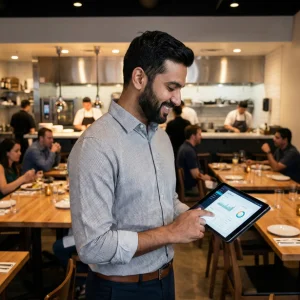
TekCounter POS: Cloud-based, GST-ready POS built for chain scalability. Real-time syncing across outlets ensures consistent pricing, billing, and reporting from one dashboard.
Inventory Management: Recipe-linked inventory control with real-time alerts. Track usage, detect wastage, and maintain accurate stock levels across all locations automatically.
KDS + Captain App: Streamlined kitchen and service communication. Orders reach the kitchen instantly, priorities auto-update, and delays drop by up to 30%.
Online Orders: Manage Swiggy, Zomato, and your D2C channels in one dashboard. Unified menus, synced pricing, and automated order flow eliminate manual errors.
Reports & Analytics: Gain complete visibility into sales, wastage, and theft control. Generate outlet-wise performance reports instantly and make data-driven decisions that protect profit margins.
Each module connects under one login, giving owners one source of truth.
Operational Strategies for Multi Outlet Control
- Implement standard recipes and portioning via recipe management.
- Use centralized supplier contracts to control cost variations.
- Deploy role based access control for outlet managers.
- Track real time outlet scorecards (sales, wastage, uptime, NPS).
- Audit weekly: inventory vs sales vs consumption variance.
These aren’t suggestions, they’re survival systems for scalable chains.
Mistakes to Avoid
- Expanding before SOPs are digitally documented.
- Using separate software for POS, KDS, and inventory.
- Ignoring data reconciliation between outlets.
- Overreliance on WhatsApp reporting.
- Failing to enforce standard recipes.
Action Plan (Quick Start)
- Audit your current POS & inventory process.
- Identify data silos or manual reporting points.
- Implement a unified system (TekCounter).
- Set 3 KPIs: Wastage %, Order Time, Profit per Outlet.
- Review weekly → Optimize → Scale.
Conclusion: The TekCounter Powered Chain
The restaurant industry is brutal, but scalable systems turn chaos into control.
TekCounter isn’t just another POS; it’s the growth engine behind modern food brands.
- Centralized multi outlet control
- Recipe level inventory tracking
- Real time KDS + Delivery Integration
- Chain ready GST compliance
If you’re serious about scaling from 5 to 50 outlets, TekCounter gives you the clarity, control, and consistency you’ve been missing.