
You don’t have a sales problem. You have a visibility problem. The right TekCounter POS system exposes the truth your restaurant hides.
You bleed money every day, but you can’t see where it leaks. Staff blames inventory, kitchen blames orders, you guess your way through decisions.
POS reports expose the truth your restaurant hides.
The Real Problem, You're Running Blind
You think your restaurant runs fine because customers walk in. But footfall is not profit, and a busy restaurant can still bleed money every single day without you realizing it.
Reality looks different when you break it down:
- You sell ₹5 lakh per month but keep less than ₹50,000 profit
- Your inventory disappears faster than your sales grow
- Your staff makes "small" billing mistakes daily
- You don't track it, so you tolerate it.
What Happens Without POS Reports
1. You Guess Your Best-Selling Items
You assume your biryani sells the most. But assumptions are not a strategy, and optimizing your menu around the wrong items quietly kills your revenue.
Actual data might show:
- Starters drive 40% of revenue
- Combos increase ticket size by 25%
Without reports, you optimize the wrong menu and leave money on the table every service.
2. You Lose Money in Inventory
Food cost should stay around 30 to 35%. Every percentage point above that is direct profit walking out the door, and without tracking you will never know how bad it actually is.
But without tracking:
- Over-ordering increases wastage
- Theft goes unnoticed
- Recipes lack standardization
Your margins silently collapse while your revenue looks healthy on the surface.
3. You Can't Control Staff Performance
You rely on trust instead of data. Trust is not a system, and without numbers backing your decisions, small daily losses from your team compound into serious damage by month end.
Reality:
- Billing errors increase daily losses
- Unauthorized discounts kill margins
- Slow service reduces table turnover
You don't fix what you don't measure.
4. You Miss Growth Opportunities
Without data, every marketing decision is a gamble. You spend on promotions without knowing who your best customers are, when they visit, or what actually drives them to order more.
You don't know:
- Peak hours
- High-value customers
- Delivery vs dine-in profitability
So you run promotions blindly.
You don't have a business system. You have controlled chaos.
Step-by-Step Solution Guide
Step 1: Track Sales Reports Daily
Focus on:
- Total revenue
- Item-wise sales
- Category performance
Why it matters:
You identify what actually makes money.
Sales Angle:
“Show owners that one simple report can increase revenue without adding customers.”
Step 2: Analyze Inventory Reports Weekly
Track:
- Stock in vs stock out
- Recipe consumption
- Variance
Why it matters:
You control wastage and theft.
Example:
A 5-outlet chain reduced food cost from 38% to 29% in 45 days using structured reporting.
Step 3: Monitor Staff Performance
Track:
- Orders per staff
- Billing errors
- Discounts applied
Why it matters:
You remove inefficiencies.
Step 4: Use Hourly Sales Reports
Track:
- Peak hours
- Slow hours
Why it matters:
You optimize staffing and offers.
Step 5: Combine Reports for Decisions
Connect:
- Sales + inventory
- Staff + billing
- Orders + customer data
Why it matters:
You move from reactive to predictive decisions.
Cost Analysis, What Ignoring Reports Costs You
Before you check POS pricing plans, see what ignoring reports actually costs you.
Let’s break it down.
Scenario Without Reports:
- Monthly revenue: ₹5,00,000
- Food cost: 38% = ₹1,90,000
- Ideal food cost: 30% = ₹1,50,000
- Loss = ₹40,000 per month
Add:
- Billing errors: ₹10,000
- Wastage: ₹15,000
Total loss = ₹65,000 monthly
Yearly loss = ₹7,80,000
You are not losing money once. You lose it every single day.
Scenario With POS Reports (TekCounter)
- Food cost optimized to 30%
- Errors reduced by 40%
- Wastage reduced by 20 to 25%
Result: Profit jumps without increasing sales
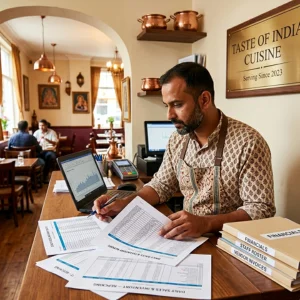
Tools and Tech Stack Breakdown
You don't need multiple tools. One restaurant analytics software connects everything.
Traditional Setup
- POS for billing
- Excel for inventory
- WhatsApp for orders
- Manual reports
Result: Data scattered, decisions delayed.
TekCounter System
- POS + Billing → Real-time sales tracking
- Inventory → Automated stock tracking
- KDS → Faster kitchen operations
- Online orders → Centralized data
- Analytics dashboard → Decision engine
Sales Angle:
“Position TekCounter as the brain of the restaurant, not just a billing tool.”
Operational Strategies Using POS Reports
1. Menu Engineering
- Remove low-margin items
- Promote high-profit dishes
2. Dynamic Pricing
- Increase prices on high-demand items
- Bundle slow-moving items
3. Staff Optimization
- Assign best staff during peak hours
- Reduce idle manpower
4. Inventory Control
- Order based on consumption patterns
- Standardize recipes
Result: Every decision becomes data-backed.
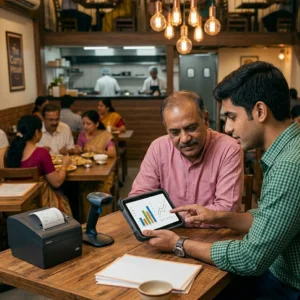
Growth Blueprint Using POS Reports
Phase 1: Visibility
Track everything daily. Sales, inventory, staff performance, and order patterns all need to be recorded and reviewed without gaps. You cannot fix what you refuse to look at, and this phase is purely about building the habit of seeing your numbers clearly every single day.
Phase 2: Optimization
Once you have consistent data, you start cutting what hurts and strengthening what works. Reduce food cost by fixing over-ordering, remove low-margin items from your menu, and tighten staff schedules around your actual peak hours. This phase is where your profit margin visibly improves without adding a single new customer.
Phase 3: Expansion
Data gives you the confidence to scale without gambling. When your first outlet runs on a proven system, replicating it becomes a process, not a risk. You open new outlets knowing exactly what sells, what costs, and what your team needs to perform.
Example:
A restaurant owner opens a second outlet only after:
- Identifying top-selling items
- Standardizing recipes
- Optimizing staff workflows
This is how chains are built. Not on ambition alone, but on systems that are proven, repeatable, and backed by real data from every shift.
Mistakes to Avoid
1. Ignoring Reports
Data exists in your POS but you open it once a month, if at all. Every day you skip your reports is a day theft, wastage, and billing errors go unnoticed and uncorrected. The numbers do not lie, but they can only help you if you actually read them.
2. Overcomplicating Analytics
Most owners get overwhelmed and either ignore reports completely or drown in dashboards that mean nothing. You do not need 50 reports. You need the right 5, checked consistently, with clear action attached to each one.
3. Not Acting on Data
Pulling a report and doing nothing with it is worse than not pulling it at all, because it gives you false confidence that you are on top of things. Data without action is just noise collecting on a screen. Every report should end with one decision, not a saved file.
4. Using Outdated Systems
Legacy POS systems generate reports that are slow, disconnected, and require manual export to even understand. By the time you get the data, the damage is already done and the window to fix it has passed. Your system should give you answers in real time, not yesterday.
5. No Integration
When your POS, inventory, and orders live in separate tools, you never see the full picture. Disconnected tools kill visibility, and without visibility, every decision you make is still a guess.
If your system doesn't connect everything, it limits your growth.
30-Day Action Plan
- Audit your current POS system
- Identify missing reports
- Track daily sales manually for 7 days
- Compare expected vs actual inventory
- Identify top 5 profit-making items
- Remove 2 low-performing items
- Monitor staff billing patterns
- Analyze peak hours
- Optimize staff schedule
- Reduce unnecessary discounts
- Standardize recipes
- Track wastage daily
- Implement weekly inventory checks
- Train staff on reporting discipline
- Set revenue targets
- Compare dine-in vs delivery sales
- Introduce combo offers
- Track customer repeat rate
- Identify top customers
- Launch targeted offers
- Monitor report consistency
- Automate reporting system
- Integrate all operations
- Set weekly review meetings
- Fix leakage points
- Optimize supplier orders
- Measure cost improvements
- Scale marketing based on data
- Plan expansion strategy
- Upgrade to a fully connected system
Conclusion
You don’t grow a restaurant with effort. You grow it with clarity. Every successful chain runs on data, not assumptions. TekCounter turns your restaurant into a system, not a struggle. It connects sales, inventory, staff, and customers into one engine that drives profit and scale. You stop guessing. You start scaling.