
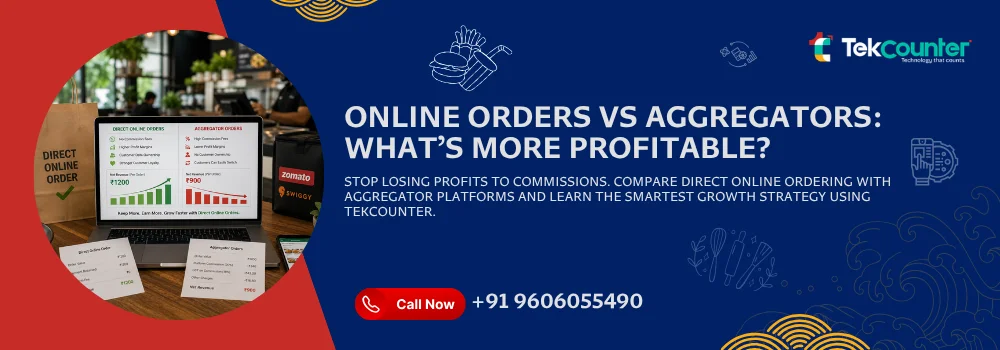
Online Orders vs Aggregators: What's More Profitable for Your Restaurant?
Running a restaurant has never been harder. Every order should increase your profits, yet many restaurant owners watch their margins disappear with every delivery. High commissions, delayed settlements, and limited customer ownership leave many businesses working harder without earning more.
The biggest mistake isn't using aggregators. The biggest mistake is depending on them completely.
Restaurants often celebrate rising order numbers without checking how much money actually reaches their bank account. A thousand orders mean nothing if commissions, discounts, packaging costs, and marketing fees consume your profits. The restaurant that earns the most isn't always the one selling the most meals. It is the one that keeps more money from every order.
The real question isn't whether you should use online delivery platforms. The real question is how you should use them. The answer starts with understanding the difference between online order integration and complete dependence on aggregator marketplaces.
Why Restaurants Lose Money Without Realizing It
Most restaurants join food delivery platforms because they promise instant visibility. That promise works. Orders start arriving, revenue grows, and business looks healthy from the outside. Unfortunately, revenue and profit rarely tell the same story.
Every order placed through an aggregator comes with several hidden costs. Besides commission charges that often range between 18% and 30%, restaurants absorb packaging expenses, promotional discounts, delivery adjustments, and advertising costs. After paying all these expenses, many restaurants discover they earned only a fraction of what they expected.
Imagine a restaurant selling a ₹500 order.
- The customer pays ₹500.
- The aggregator deducts commission.
- Marketing fees reduce earnings further.
- Discount participation lowers revenue.
- Packaging increases operational costs.
- The restaurant finally receives much less than the original selling price.
Multiply this situation by hundreds of orders every month and the numbers become alarming. Many restaurants believe they are growing while their profit margins shrink every quarter.
This problem becomes even worse when restaurants never build a direct relationship with customers. Aggregator platforms own customer data, communication channels, and loyalty opportunities. Restaurants fulfill the orders but rarely control future sales.
Why Online Order Integration Changes the Business
Online order integration transforms every order into a long-term business asset.
Instead of treating delivery as another sales channel, successful restaurants build their own ordering ecosystem. Customers can place orders through the restaurant website, mobile app, QR menus, WhatsApp, or social media while the restaurant manages everything from one platform.
TekCounter connects direct ordering channels with billing, kitchen operations, inventory, and delivery management. Every order automatically reaches the POS, Kitchen Display System, and inventory without manual entry. Staff work faster because they don't switch between multiple devices or applications.
This creates three immediate business advantages.
First, restaurants keep significantly more profit because they avoid heavy marketplace commissions.
Second, restaurant owners finally own customer information. They can launch loyalty programs, WhatsApp campaigns, personalized offers, and repeat purchase campaigns without depending on third parties.
Third, operations become faster because every department works inside one connected ecosystem instead of isolated software.
Real Business Scenario
Consider two restaurants that each receive 1,000 online orders every month.
Restaurant A depends entirely on aggregators.
Restaurant B uses aggregators only to acquire new customers while encouraging repeat customers to order directly through its own online ordering system powered by TekCounter.
Restaurant A pays commission on every order forever.
Restaurant B pays commission only once when acquiring a customer. Future orders arrive through direct channels with much higher profit margins.
After twelve months, both restaurants may report similar sales numbers.
Only one restaurant builds a predictable, scalable, and profitable business.
That difference separates businesses that survive from businesses that expand into multiple outlets.
Step by Step Guide to Build a More Profitable Ordering System
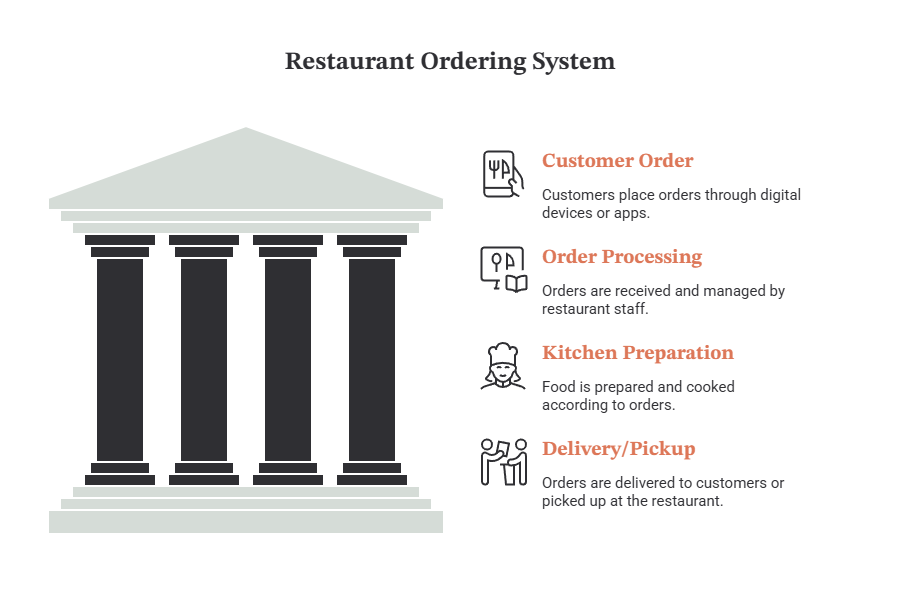
Many restaurant owners think they have to choose between food delivery marketplaces and direct ordering. In reality, the most profitable restaurants use both while gradually encouraging customers to order directly.
Start by connecting your POS with every ordering channel through an Online Ordering Solution. With TekCounter, you can manage website, QR code, WhatsApp, and marketplace orders from one dashboard, eliminating manual entry and reducing order errors.
Next, focus on turning marketplace customers into repeat direct customers. Offer loyalty rewards, exclusive menu items, or personalized discounts to encourage future direct orders and reduce commission costs.
As direct orders grow, automate inventory, kitchen operations, and delivery tracking to improve efficiency, lower costs, and deliver a better customer experience.
Finally, review key metrics every week. Track direct order percentage, average order value, repeat purchases, delivery time, and profit per order to make smarter, data-driven decisions.
Cost Analysis: Where the Money Actually Goes
Let's compare a restaurant processing 1,000 monthly orders with an average order value of ₹600.
Monthly sales equal ₹6,00,000.
A restaurant relying mainly on aggregators may lose between ₹1,20,000 and ₹1,80,000 annually through commissions, promotional participation, and additional marketplace expenses.
A restaurant using online order integration significantly reduces these recurring costs. While direct ordering still involves payment gateway charges and marketing investments, the savings remain substantial because the restaurant controls customer acquisition, pricing, and retention.
The financial advantage grows every month because repeat customers become increasingly profitable. Customer acquisition costs remain temporary, while commission expenses continue indefinitely when restaurants depend only on marketplace platforms.
Restaurants serious about expansion should calculate profit per order instead of total sales. That single metric often changes every investment decision.
Tools and Technology Stack Breakdown
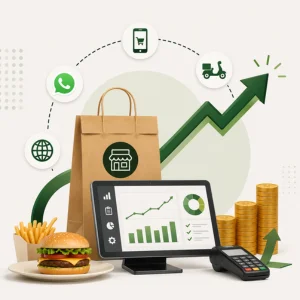
Technology should simplify restaurant operations instead of creating more work. Unfortunately, many restaurants operate with separate billing software, separate delivery applications, separate inventory systems, and disconnected reporting tools. Staff waste valuable time switching between platforms while owners struggle to understand overall business performance.
A connected restaurant always outperforms a disconnected restaurant.
TekCounter combines modern restaurant operations into one intelligent ecosystem. Its cloud-based POS processes every order instantly while the Kitchen Display System sends orders directly to the kitchen. Inventory updates automatically after every sale, reducing stock discrepancies and helping owners control food costs. Online order integration connects website orders alongside Zomato Swiggy integration, allowing every incoming order to appear inside one dashboard instead of multiple devices.
Because every module shares the same data, restaurant owners gain complete visibility into sales, inventory, kitchen efficiency, and customer behaviour. Instead of making decisions based on guesswork, they can identify profitable menu items, monitor outlet performance, and improve operations using real-time insights.
Operational Strategies
Technology alone cannot improve profitability. Restaurant owners must build systems that encourage customers to return directly instead of repeatedly ordering through marketplaces. Every delivery order should become an opportunity to create a long-term customer relationship.
Start by including QR codes inside every delivery package that lead customers to your own ordering platform. Offer exclusive rewards that customers cannot receive on aggregator platforms. Promote loyalty points, free delivery, or limited-time menu offers that encourage direct purchases. These simple operational changes gradually reduce dependency on commission-heavy marketplaces while increasing customer lifetime value.
Restaurants should also train staff to monitor direct order growth every week. Measuring repeat customer percentage, average order value, and direct ordering share creates accountability across the business. Small improvements compound quickly when every department works toward increasing profitable orders instead of simply increasing order volume.
Growth Blueprint
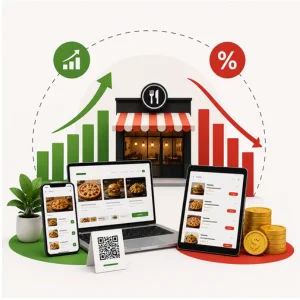
Every successful restaurant reaches a point where growth becomes difficult. Orders increase, staff become busier, and the owner spends more time solving problems than building the business. Most restaurants assume they need more customers. In reality, they need a better system. The fastest way to increase profits is to increase the percentage of direct orders.
Start by using aggregators as a customer acquisition channel instead of your primary sales channel. Their reach gives you access to thousands of new customers every month, but your goal should be to convert those first-time buyers into repeat customers who order directly. Every delivery package should include a QR code, a loyalty offer, or a discount that encourages customers to visit your own ordering platform.
Next, create a customer retention engine. Send WhatsApp order confirmations, birthday offers, festive promotions, and personalized recommendations based on previous purchases. Customers who feel connected to your restaurant return more often and spend more over time. TekCounter makes this process simple by connecting CRM, POS, online ordering, and customer data into one platform.
Once direct orders grow consistently, focus on improving operational efficiency. Analyze your best-selling menu items, remove low-margin products, reduce food waste, and optimize preparation times. A connected restaurant earns more because every department works with the same real-time information. Managers no longer waste hours reconciling reports or correcting inventory errors.
Finally, prepare your restaurant for expansion. A business that depends entirely on manual processes cannot scale efficiently. Cloud-based systems allow owners to monitor multiple outlets, compare performance, manage centralized inventory, and maintain consistent customer experiences across every location. That level of control separates a single successful restaurant from a successful restaurant chain.
Mistakes to Avoid
Many restaurant owners make decisions that quietly reduce profitability for years. They rarely notice the problem because sales continue to increase while margins slowly decline. Avoiding these mistakes can improve your financial performance without increasing marketing spend.
The first mistake involves relying entirely on aggregator platforms. They generate valuable exposure, but they should never become your only source of online orders. When another company controls your customer relationship, your long-term growth remains limited.
The second mistake comes from using disconnected software. Separate systems for billing, inventory, delivery, kitchen management, and reporting create duplicate work and expensive operational mistakes. Employees spend time entering data instead of serving customers, and owners lose visibility across the business.
Another common mistake involves ignoring customer data. Restaurants often celebrate thousands of completed orders without knowing how many customers actually return. Repeat customers generate the highest profits because acquisition costs disappear after the first purchase. Without customer insights, restaurants continue spending money to acquire people they already served.
Many businesses also compete only on discounts. Constant discounting attracts price-sensitive customers who quickly switch to competitors offering slightly better deals. Instead, compete through convenience, speed, consistency, loyalty rewards, and exceptional customer experience.
Finally, avoid making decisions based only on revenue. High sales numbers look impressive, but profit determines whether a restaurant survives. Measure profit per order, repeat customer rate, average order value, food cost percentage, and direct ordering percentage every month. Those numbers reveal the true health of your business.
Conclusion: Online Order Integration
Restaurant owners don't lose money because customers stop ordering. They lose money because too much of every order disappears before it reaches their bank account. Aggregators provide excellent visibility, but they should support your business, not control it. The restaurants that build long-term profitability combine marketplace reach with a powerful direct ordering strategy.
Online order integration gives restaurants ownership of their customers, their data, and their future.
TekCounter brings everything together inside one intelligent platform. From POS and billing to Kitchen Display System, inventory, CRM, online ordering, and Zomato Swiggy integration, every module works together to eliminate manual work, improve customer experience, and increase profitability. Instead of managing disconnected software, restaurant owners gain one connected ecosystem that supports daily operations and future expansion.
If your goal is simply to increase orders, almost any platform can help. If your goal is to build a profitable, scalable restaurant business, you need a system that keeps more revenue, automates operations, and helps customers come back again and again. That is exactly what TekCounter delivers.