
Top 10 Hidden Costs Eating Into Your Restaurant Profits
You can have a busy restaurant, strong sales, and a packed dining room while still losing money every month. Revenue can hide a broken cost structure, especially when small leaks across food, labor, inventory, rent, technology, and operations quietly compound. Restaurant cost control starts when you stop asking, "How much did we sell?" and start asking, "How much did we actually keep?"
That distinction separates an owner who builds a profitable restaurant from one who spends every month chasing cash flow. Your sales report may show ₹20 lakh in monthly revenue, but that number means very little if food costs, salaries, rent, delivery commissions, wastage, discounts, repairs, and operational leakage consume most of it. The Restaurant Set-Up Playbook reinforces this reality by treating food costs, labor, rent, utilities, marketing, software, commissions, maintenance, and working capital as core parts of restaurant financial planning.
Most owners notice these costs only after the damage appears in the bank account. By then, the problem rarely comes from one massive expense. Profit usually disappears through dozens of small leaks, and your job as an owner is to identify those leaks before they become permanent.
The Restaurant Profit Illusion
Imagine you run a restaurant doing ₹20 lakh in monthly sales. You look at the number and feel confident because customers keep coming, online orders keep arriving, and your average daily sales look healthy.
Then the bills arrive.
Your food and raw material costs can consume roughly 30% to 35% of revenue. Labor can take another 25% to 30%, while rent, utilities, marketing, technology, delivery commissions, maintenance, and miscellaneous expenses continue eating into the remaining amount. The Restaurant Set-Up Playbook identifies these categories as recurring operating expenses and recommends controlling them against revenue rather than treating them as isolated bills.
At ₹20 lakh in sales, a 32% food cost means approximately ₹6.4 lakh goes toward food and raw materials. A 27% labor cost adds another ₹5.4 lakh. Before you account for rent, utilities, marketing, software, commissions, maintenance, taxes, discounts, and leakage, ₹11.8 lakh has already left the equation.
That leaves very little room for mistakes.
Hidden Cost #1: Inventory Waste
You purchase ingredients expecting to sell them, but demand rarely follows your spreadsheet perfectly. Vegetables spoil, ingredients expire, portions drift, kitchen staff overproduce, and slow-moving items occupy cash that you could use elsewhere.
The Restaurant Set-Up Playbook recommends an ideal food cost range of roughly 25% to 35% and specifically highlights trim, shrinkage, yield, portion control, and recipe costing as major factors in food profitability.
Suppose your restaurant buys ₹4 lakh worth of ingredients every month. A seemingly small 5% avoidable waste creates ₹20,000 in monthly leakage. That becomes ₹2.4 lakh every year without adding a single rupee to your revenue.
Waste does not look dangerous until you multiply it by 12 months.
Hidden Cost #2: Portion Inconsistency
Your recipe says 250 grams, but your kitchen serves 300 grams. One plate may not look expensive, but hundreds of inconsistent portions can quietly destroy your food cost.
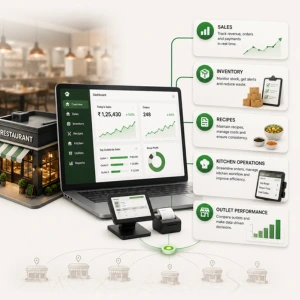
Consider a dish that costs ₹78.40 in ingredients at the standardized portion size. A restaurant that consistently over-serves can push that cost higher without changing the menu price or noticing the difference immediately. A TekCounter restaurant management interface can support recipe standardization with defined portion sizes and food costs across outlets, helping owners maintain consistency as the business grows.
This matters even more when you operate multiple outlets. A small portion variance across 10 restaurants can turn into a significant annual cost problem.
Hidden Cost #3: Inventory Variance and Leakage
Your system says you have 45 kg of chicken. The physical count shows 40.5 kg. Where did the missing 4.5 kg go?
Maybe staff over-portioned it. Maybe spoilage went unrecorded. Maybe someone made an incorrect stock entry. Maybe the business experienced theft. Whatever the cause, your P&L eventually pays for the difference.
A restaurant needs to compare theoretical stock with actual stock consistently. The operational dashboards developed around TekCounter demonstrate this principle through inventory variance tracking, including system quantity, actual quantity, and variance.
If you cannot explain your inventory variance, you cannot control your food cost.
Hidden Cost #4: Labor Inefficiency
Payroll represents more than salaries. You also pay for idle hours, overtime, inefficient shifts, excessive staffing during slow periods, and productivity losses caused by poor processes.
A restaurant may maintain a 25% to 30% labor cost target, yet still waste money because managers schedule staff based on habit instead of demand. A slow Tuesday afternoon does not need the same staffing pattern as a Friday dinner rush.
You need to connect staffing decisions with sales patterns, order volumes, service times, and outlet performance. That shift turns labor management from guesswork into an operating decision.
Hidden Cost #5: Delivery Commissions
Online ordering can increase your revenue while simultaneously reducing your margin. The Restaurant Set-Up Playbook notes that delivery platform commissions can reach 18% to 30% per order, which means owners need to factor those charges into their pricing strategy.
Take a ₹1,000 online order. At a 25% commission, ₹250 disappears before you consider food cost, packaging, labor, discounts, and other operating expenses. If you price delivery items exactly like dine-in items, you may generate more orders while making less money per order.
That is not growth. That is buying revenue at the expense of margin.
Hidden Cost #6: Discount Dependency
Discounts can fill tables, but they can also train customers to wait for offers. When an owner measures only gross sales, a heavily discounted order can look successful even when the contribution margin looks terrible.
You need to know whether a promotion creates incremental demand or simply reduces the price paid by customers who would have purchased anyway. The difference can decide whether your marketing generates profit or simply transfers money from your business to your customer.
Hidden Cost #7: Manual Errors
Every manual entry creates another opportunity for an error. Wrong prices, duplicate orders, missed modifiers, incorrect bills, forgotten discounts, and communication gaps between the service team and kitchen can create direct financial leakage.
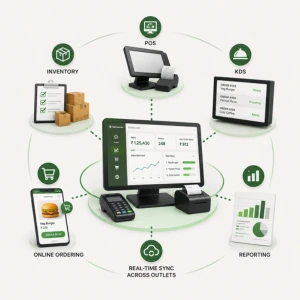
A connected POS and KDS can reduce these handoff problems by moving order information directly from the point of sale into kitchen operations. TekCounter positions POS, KDS, inventory, online ordering, and reporting as connected operational systems rather than separate tools.
Hidden Cost #8: Maintenance and Equipment Downtime
Restaurant equipment fails at the worst possible time. A refrigerator breakdown can spoil inventory, while a faulty POS terminal can slow billing during peak hours.
Owners often budget for buying equipment but forget to budget for maintaining it. Preventive maintenance costs money, but unexpected downtime can cost far more through lost sales, emergency repairs, spoiled stock, and customer frustration.
Hidden Cost #9: Cash Flow Gaps
Profit on paper does not guarantee cash in the bank. You still need to pay suppliers, salaries, rent, utilities, taxes, marketing bills, and other expenses according to their payment schedules.
The Restaurant Set-Up Playbook recommends maintaining a substantial operating reserve because the first months can generate unstable revenue while expenses continue. It specifically recommends planning working capital around several months of operating expenses.
An owner who ignores cash flow can run a technically profitable business and still struggle to pay next month's bills.
Hidden Cost #10: Lack of Real-Time Visibility
This cost looks harmless because nobody sends you an invoice for it. You simply lose the ability to make fast decisions.
When your sales, inventory, kitchen, customer orders, and outlet performance sit in disconnected systems, you spend hours collecting information instead of acting on it. That delay can hide waste, slow response to falling sales, and make multi-outlet management heavily dependent on manual reporting.
A modern restaurant needs one operational view that tells the owner what happened, what is happening, and where the business is leaking money. TekCounter's centralized operations model connects outlet performance, inventory, recipe standardization, staff information, alerts, and reporting in one environment.
What This Means for Your Restaurant
These hidden costs rarely arrive alone. Inventory waste increases food cost, poor recipes increase portion variance, weak controls create stock leakage, inefficient staffing increases labor cost, and disconnected systems make every problem harder to identify.
That is why restaurant cost control cannot mean simply negotiating cheaper ingredients or cutting staff. Real cost control means creating visibility before you make decisions.
A restaurant owner should know the cost of every recipe, the movement of every important ingredient, the performance of every outlet, the impact of every discount, and the profitability of every sales channel. Once you have that visibility, you can start cutting waste without damaging the customer experience or slowing growth.
The next section will turn these hidden costs into a practical operating system. We will break down how to calculate the financial impact, where technology fits, which restaurant processes need tighter control, and how TekCounter can help owners move from reactive cost cutting to predictable profitability.
Step-by-Step Solution Guide
Restaurant cost control does not start with cutting expenses blindly. It starts with creating a system that shows you exactly where money enters, where it moves, and where it disappears. Your first job is to establish a baseline for food cost, labor cost, inventory variance, average order value, discounts, delivery commissions, and outlet-level profitability. The Restaurant Set-Up Playbook also recommends tracking metrics such as average order value, delivery performance, repeat purchases, customer acquisition cost, and break-even performance when building a financially sustainable restaurant.
Step 1: Establish Your Baseline
Pull the last 30 days of sales and expenses into one view. Compare actual food cost against theoretical food cost, actual inventory against system inventory, labor against revenue, and channel-level revenue against channel-level costs.
Step 2: Find Your Three Biggest Leaks
Do not try to fix everything simultaneously. Identify the three costs creating the largest financial impact and attack those first.
Step 3: Standardize Recipes
Every important menu item needs a defined recipe, portion size, ingredient quantity, and cost. The uploaded TekCounter material shows recipe standardization with portion size, food cost, and outlet synchronization, which gives multi-outlet operators a practical model for maintaining consistency.
Step 4: Audit Inventory
Run regular stock audits and compare theoretical consumption against actual stock. Your system should flag unusual variance instead of forcing you to discover missing stock weeks later.
Step 5: Connect Sales to Operations
Your POS should not operate as an isolated billing machine. Connect billing with KDS, inventory, online orders, payments, reporting, and outlet operations so each transaction creates useful operational data.
Step 6: Review the Numbers Weekly
Monthly reviews arrive too late when a restaurant has thin margins. Review your critical cost indicators every week and assign an owner to every abnormal variance.
Cost Analysis: What a Small Leak Really Costs
Let us put the problem into numbers.
Assume a restaurant generates ₹20 lakh in monthly sales and spends approximately ₹6.4 lakh on food and raw materials at a 32% food cost. The Restaurant Set-Up Playbook places the ideal food cost range around 25% to 35%, depending on the concept and menu economics.
Now imagine poor portion control, waste, and purchasing inefficiency push that food cost from 32% to 35%. The additional 3 percentage points represent ₹60,000 every month. That becomes ₹7.2 lakh over a year.
The same principle applies to labor. If labor represents ₹5.4 lakh at 27% of sales and scheduling inefficiency adds another 2 percentage points, the extra cost reaches ₹40,000 per month. Combine that with ₹20,000 in avoidable inventory waste and ₹30,000 in discount or delivery leakage, and you can easily create more than ₹1.5 lakh in monthly profit pressure without losing a single customer.
Tools and Tech Stack Breakdown
Technology should solve operational problems, not create another dashboard nobody opens. Your core restaurant technology stack should connect billing, inventory, kitchen execution, online ordering, customer data, payments, and reporting so your team works from the same operational truth.
POS
Your POS should capture every order, modification, discount, payment, and transaction. TekCounter supports core POS workflows including billing, day-end operations, discounts, promotions, service charges, combo items, split bills, merge bills, and other controls that help create a cleaner transaction trail.
Inventory
Inventory technology should connect purchases, recipes, consumption, stock audits, and reporting. TekCounter's adoption framework specifically includes inventory, recipes, purchasing, consumption, stock audit, barcode, and bulk upload capabilities.
KDS and Kitchen Operations
A KDS reduces dependence on verbal handoffs between front-of-house and kitchen teams. TekCounter includes KDS, Captain App, QR ordering, self-ordering, and kitchen routing within its kitchen operations framework.
Online Ordering
Online ordering should feed into the same operational ecosystem rather than create another disconnected sales channel. TekCounter's online ordering framework covers website orders, aggregator orders, direct orders, delivery, and payments.
Reporting
Owners need reports that lead to decisions. TekCounter's reporting structure includes POS sales, tax reports, inventory reports, item reports, dashboards, and owner reports, giving management a broader view of business performance.
Multi-Outlet Control
Once you operate multiple outlets, manual consolidation becomes a serious management cost. TekCounter's enterprise framework includes head-office controls, multi-outlet operations, automatic synchronization, cloud backup, digital menu, mobile POS, and Director App capabilities.
Operational Strategies
Technology alone will not fix a badly managed restaurant. You need operating discipline around the technology.
Start with daily controls. Close every day properly, review discounts and voids, check unusual transactions, and confirm that cash and digital payments reconcile. Your management team should treat exceptions as signals that require investigation rather than numbers that simply appear on a report.
Then move to weekly controls. Review food cost, inventory variance, labor percentage, sales by channel, best and worst-selling items, wastage, and customer complaints. Give each metric an owner and a target, because a metric without accountability becomes decoration.
Recipe discipline also matters. A recipe should not exist only in the chef's memory. Standardize ingredients, quantities, yields, portions, and selling prices so every outlet works toward the same economic target. The Restaurant Set-Up Playbook specifically connects recipe costing with food cost, yield, shrinkage, portion control, and contribution margin.
Finally, create an exception culture. If inventory variance crosses your acceptable threshold, investigate it. If food cost rises, identify the cause. If one outlet underperforms, compare its operations with your stronger outlets before simply blaming the location or staff.
Growth Blueprint
Cost control should not become an excuse for slowing growth. Your goal is to protect margins while creating the operational capacity to sell more.
Start by improving the economics of your existing menu. Identify high-volume items with weak contribution margins and low-volume items that consume expensive ingredients. Use recipe costing and menu mix analysis to decide what deserves promotion, repricing, redesign, or removal. The Restaurant Set-Up Playbook specifically recommends contribution margin analysis and menu engineering to understand which dishes create stronger economics.
Next, improve order throughput. Faster billing, cleaner kitchen communication, and better order routing can help your team handle more demand without automatically adding more staff.
Then expand profitable channels. Online ordering can create incremental demand, but you need to understand the economics of every channel before scaling it. Compare dine-in, takeaway, direct online orders, and aggregator orders based on revenue, commissions, food cost, packaging, and contribution margin.
For multi-outlet businesses, standardization becomes the growth engine. Centralize menus, pricing, recipes, promotions, inventory rules, and reporting where appropriate, while allowing outlets to execute efficiently. TekCounter's centralized operations framework supports menu management, pricing and taxes, promotions, outlet settings, inventory synchronization, and recipe standardization across outlets.
Scale the system before you scale the number of outlets.
Mistakes to Avoid
Cutting Quality to Protect Margin
Cheap ingredients can reduce immediate food cost while damaging customer satisfaction and repeat business. Improve purchasing, portioning, yield, waste, and menu economics before compromising the product.
Cutting Staff Without Studying Productivity
Reducing headcount can create slower service, employee burnout, order errors, and lost sales. Measure workload and productivity before making staffing decisions.
Buying Technology Without Adoption
A POS cannot improve your restaurant if staff bypass it or managers ignore its reports. TekCounter's customer health framework treats implementation, configuration, staff training, active usage, usage frequency, and business value as separate adoption requirements.
Measuring Revenue Instead of Contribution
A ₹1 lakh sales channel does not automatically outperform a ₹70,000 channel. Compare the actual contribution after food cost, commissions, discounts, packaging, labor, and other channel-specific costs.
Waiting Until Month-End
A month-end report can tell you that you lost money. It cannot recover the inventory wasted three weeks earlier or the margin lost through uncontrolled discounts. Build daily and weekly controls instead.
Running Every Outlet Differently
Different processes create different results. Standardize the critical systems while allowing local teams enough flexibility to serve their market.
30-Day Restaurant Cost Control Action Plan
1. Day 1 to 3: Establish Your Baseline
Record sales, food cost, labor cost, rent, utilities, commissions, discounts, marketing, wastage, and other major expenses from the previous 30 days. Calculate every major cost as a percentage of revenue.
2. Day 4 to 7: Audit Inventory
Count your highest-value and highest-risk ingredients first. Compare physical quantities with system quantities and investigate every material variance.
3. Day 8 to 10: Standardize Recipes
Review your top-selling dishes and document ingredient quantities, portions, yields, and recipe costs. Start with the items that generate the most sales.
4. Day 11 to 14: Review Your Menu Economics
Calculate the contribution margin of your important dishes. Identify items that sell well but generate weak margins, then decide whether to reprice, reformulate, promote, or remove them.
5. Day 15 to 17: Analyze Labor
Compare staffing levels with sales by day and time period. Identify shifts where you consistently pay for capacity that your sales volume does not require.
6. Day 18 to 20: Audit Discounts and Channels
Review every major discount and promotion. Compare dine-in, takeaway, direct online, and aggregator orders based on actual contribution rather than gross sales.
7. Day 21 to 23: Fix Operational Leakage
Review voids, bill modifications, discounts, stock adjustments, purchase entries, and other exceptions. Create clear approval rules for transactions that can create financial leakage.
8. Day 24 to 26: Connect Your Systems
Assess whether your POS, inventory, KDS, online ordering, and reporting systems share data. Replace unnecessary manual handoffs wherever possible.
9. Day 27 to 28: Build Your Weekly Dashboard
Track sales, food cost, labor cost, inventory variance, average order value, discounts, channel performance, and contribution margin. Assign one owner to each metric.
10. Day 29 to 30: Set Your Operating Rhythm
Create daily checks, weekly reviews, and monthly management reviews. Use the same metrics every week so your team can identify trends rather than react to isolated problems.
Conclusion
Restaurant cost control is not about becoming obsessed with every rupee you spend. It is about knowing which rupees create value and which ones quietly destroy your margin.
You cannot build a scalable restaurant business on spreadsheets, disconnected systems, memory, and end-of-month surprises. You need operational visibility before you need more sales.
TekCounter gives restaurant owners a connected platform across POS, inventory, KDS, online ordering, CRM, reporting, and multi-outlet operations. Its product framework covers the operational areas that directly influence cost visibility, transaction control, inventory management, kitchen execution, online orders, reporting, and centralized outlet management.
The objective is not simply to give you another POS. The objective is to help you build a restaurant operation where sales, inventory, kitchen activity, customer orders, and management reporting work together. When your systems give you the right numbers at the right time, you can cut waste, protect margins, improve execution, and make expansion less dependent on guesswork.
Stop managing the restaurant you think you have. Start managing the numbers that prove what is actually happening.